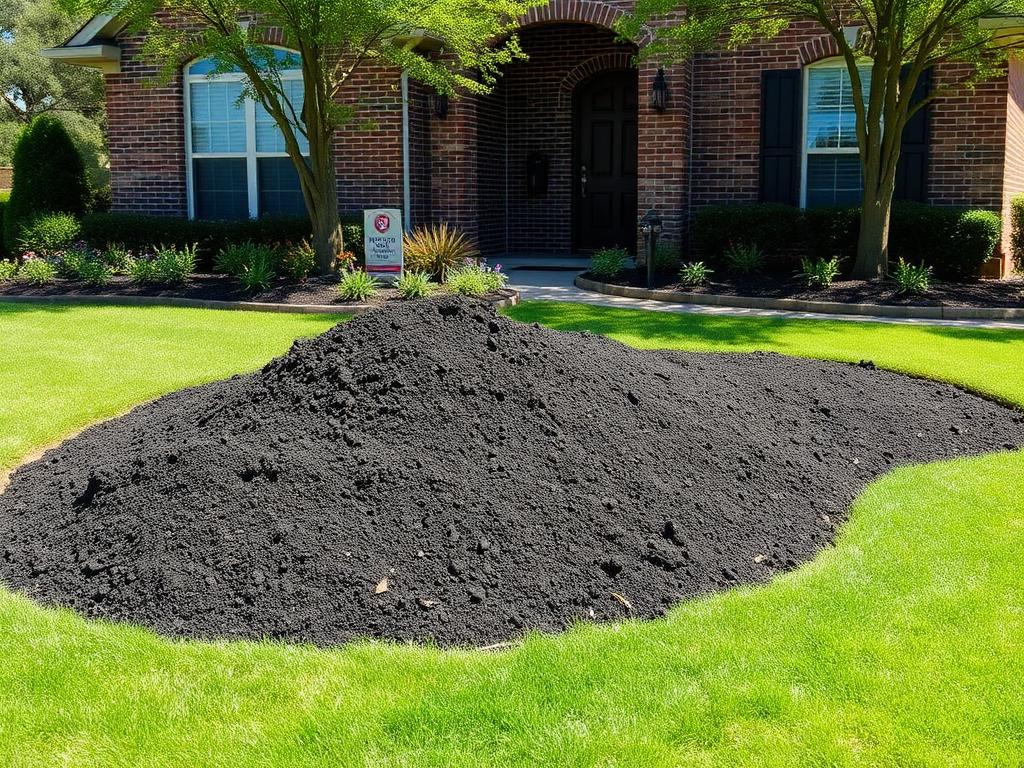
Topsoil is the uppermost layer of nutrient-rich soil, typically ranging from 2 to 12 inches deep, essential for plant growth and landscape health. It's distinguished from other soils like fill dirt or black limestone dirt by its organic matter content, fine texture, and robust biological activity, making it ideal for gardening, lawn establishment, and agricultural uses. For residents and contractors in DFW, understanding the nuances of various soils, especially screened topsoil, is crucial for successful project outcomes.
What is Topsoil? Understanding the Foundation of Healthy Landscapes
Topsoil is the lifeline of any healthy garden, lawn, or agricultural field. It's the precious, uppermost layer of earth, rich in organic matter, microorganisms, and essential nutrients, providing the perfect environment for plants to thrive. Unlike subsoil, which is often dense and lacking in nutrients, topsoil has a crumbly texture, excellent water retention capabilities, and good aeration. When you're looking to establish new garden beds, repair a patchy lawn, or ensure robust plant growth in the DFW area, high-quality screened topsoil is your go-to material.
Topsoil vs. Fill Dirt vs. Black Limestone Dirt: Key Distinctions
Many people conflate different types of soil, leading to suboptimal results in their projects. Understanding the precise differences between topsoil, fill dirt, and black limestone dirt is critical for making informed decisions.
Screened Topsoil: The Garden's Best Friend
As discussed, topsoil is the organic-rich surface layer. "Screened" topsoil has been processed through a sieve to remove rocks, roots, clods, and other debris, resulting in a finer, more consistent product. This uniformity makes it easier to spread and ensures that plants encounter fewer obstructions as their roots grow.
Best uses for screened topsoil:
- Establishing new lawns or repairing existing ones.
- Creating or amending garden beds for vegetables, flowers, or shrubs.
- Filling in low spots in garden areas where plant growth is desired.
- Improving soil structure and fertility in existing landscapes.
Fill Dirt: The Structural Foundation
Fill dirt, in contrast, is subsoil excavated from deeper layers of the earth. It contains very little organic matter and few nutrients, often consisting of clay, sand, rock, and silt. Its primary purpose is to provide stable elevation or support, not to nourish plants.
Best uses for fill dirt:
- Building up elevations for landscaping or construction projects.
- Filling large holes or depressions where compact, stable material is needed.
- Creating a solid base for patios, foundations, or driveways.
- Leveling uneven terrain before adding a layer of topsoil.
Black Limestone Dirt: A Specialized Base
Black limestone dirt (also sometimes called black gumbo or black clay) is a specific type of soil often found in North Texas, including parts of Kaufman County and the wider DFW region. It's characterized by its dark color, high clay content, and often a high pH level due to its limestone origin. While it can be fertile, its heavy clay composition can lead to poor drainage and compaction issues, especially without amendment. It's not typically a "dirt" in the sense of being a pure bulk material but rather a soil type.
Best uses for black limestone dirt (with caveats):
- In its natural state, it can be a challenge for gardening due to compaction.
- When amended with organic matter like compost or sand, it can be made more workable and fertile.
- Can be used as a stable base, similar to fill dirt, but care must be taken regarding drainage if it's exposed to moisture.
When to Order Screened Topsoil
Knowing when to order screened topsoil can save you time, money, and frustration. Here are common scenarios where quality topsoil is indispensable:
- New Construction Landscaping: After a home or commercial building is constructed, the existing topsoil is often disturbed or removed. Spreading a fresh layer of screened topsoil is crucial before laying sod or planting.
- Lawn Renovation: If your lawn is thin, patchy, or struggling, a topdressing of screened topsoil can rejuvenate it by improving soil structure and providing essential nutrients.
- Garden Bed Establishment: Whether you're building raised garden beds or creating new in-ground gardens, a solid base of rich topsoil is vital for healthy plant roots.
- Filling Low Spots: Minor depressions in your yard can lead to drainage issues. Topsoil can effectively fill these areas, promoting even grading and better water runoff.
- Tree and Shrub Planting: When planting new trees or shrubs, mixing screened topsoil into the backfill can give them a strong start.
Key Specifications for Quality Topsoil
When sourcing screened topsoil, consider these specifications to ensure you're getting a product that meets your project's needs:
- Texture: Good topsoil should have a loamy texture – a balanced mix of sand, silt, and clay. This provides good drainage while retaining moisture and nutrients.
- Organic Content: The higher the organic matter, the more fertile the soil. This indicates robust microbial activity and nutrient availability.
- pH Level: Most plants thrive in slightly acidic to neutral soil (pH 6.0-7.0). Understanding the pH of your topsoil can help you choose the right plants or amend it as needed.
- Screening: Ensure the topsoil is truly "screened" to remove unwanted debris. This saves you labor during spreading and ensures a consistent product.
Estimating Your Topsoil Needs
Calculating how much screened topsoil you'll need is crucial for efficient ordering. Here’s a simple formula:
- Measure the area: Length (feet) x Width (feet) = Square Footage
- Determine desired depth: Convert inches to feet (e.g., 4 inches = 0.33 feet)
- Calculate cubic feet: Square Footage x Depth (feet) = Cubic Feet
- Convert to cubic yards: Cubic Feet / 27 = Cubic Yards (since 1 cubic yard = 27 cubic feet)
Most bulk materials like topsoil are sold by the cubic yard or by the ton. Kaufman Sand & Gravel delivers by the load, with weight limits. A good rule of thumb is that one cubic yard of screened topsoil weighs approximately 2,000-2,400 pounds (1-1.2 tons), depending on moisture content.
For example, to cover a 500 sq ft area with 4 inches of topsoil: 500 sq ft * (4/12 ft) = 500 * 0.333 ft = 166.5 cubic feet 166.5 cubic feet / 27 cubic feet/yard = 6.17 cubic yards
So, you'd need approximately 6-7 cubic yards. Given our 7-ton load capacity, this would likely fit within a single delivery.
Bulk Material Delivery for DFW Homeowners and Contractors
At Kaufman Sand & Gravel, we understand the importance of timely and reliable material delivery for your projects, big or small. Whether you're a homeowner tackling a landscaping refresh or a contractor managing a large construction site in DFW, we're equipped to get your screened topsoil and other materials where they need to be.
We pride ourselves on offering competitive pricing and transparent delivery terms:
| Delivery Zone & Price | Load Details | Notes |
|---|---|---|
| Flat Rate | $150 per load (up to 7 tons) | Within 20 miles of Scurry, TX (75158) |
| Beyond Flat Rate | Metered per mile | For deliveries exceeding 20 miles from Scurry, TX |
| Multiple Loads | Discounts available | Inquire when ordering multiple loads |
| Large Orders | Over 28 tons requires dump truck delivery | Please call for a custom quote |
Our operations run six days a week, Monday through Saturday, to accommodate your schedule. For urgent projects, Sunday deliveries can be arranged by special request. In addition to screened topsoil, we also deliver a variety of other essential bulk materials such as gravel and sand. Learn more about our comprehensive bulk material delivery services for homeowners, contractors, and builders in DFW.
Garage Clean-Out & Dumpster Rental Services
Beyond material delivery, Kaufman Sand & Gravel also offers convenient solutions for debris removal. If your project involves a garage clean-out, renovation, or general waste disposal, our dumpster rental service can simplify the process:
- 3-Day Trailer Rental: $350. We drop off the trailer, you load it at your convenience over three days, and we haul it away.
- Live Load: $250 (up to 45 minutes). We bring the trailer, you load it while we wait, and we haul it off immediately.
This service is perfect for clearing out construction debris, yard waste, or unwanted household items. Explore our garage clean-out services for more details.
Frequently Asked Questions (FAQ)
Q: How much topsoil do I need for a new lawn? A: For a new lawn, we generally recommend a minimum of 4-6 inches of screened topsoil spread evenly across the area to provide adequate depth for root growth. Use our estimation guide above or contact us for assistance.
Q: Can I pick up topsoil directly from Kaufman Sand & Gravel? A: We specialize in bulk material delivery to your project site. While we don't offer direct pickup, our efficient delivery service brings the materials straight to you in Kaufman County and the wider DFW area.
Q: What if I need more than 7 tons of topsoil for my project? A: Our standard delivery is up to 7 tons. For larger projects requiring over 28 tons, we utilize dump truck delivery. Please call us directly at (951) 239-9096 for a custom quote on larger orders.
Request a Delivery Quote
Ready to get started on your next project with high-quality screened topsoil or other bulk materials? Contact Kaufman Sand & Gravel today for a reliable and efficient delivery service throughout the DFW area. Call us at (951) 239-9096, email us at kaufmantrailerrentals@gmail.com, or request a delivery quote directly through our website. We look forward to serving your material needs.