
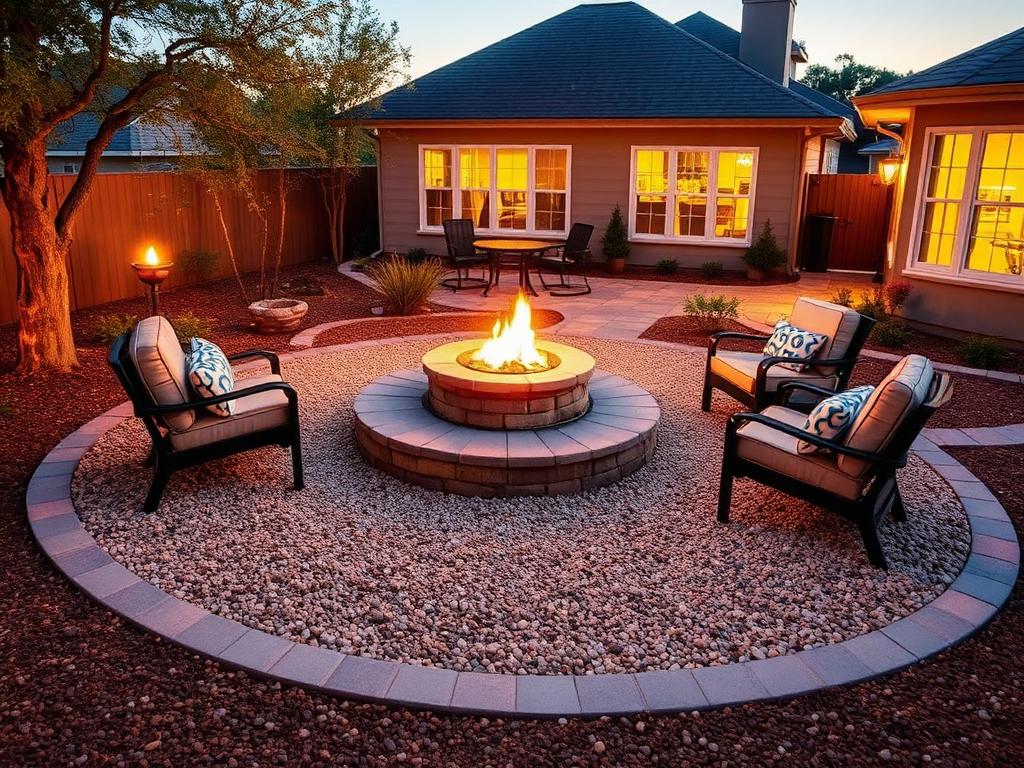
When choosing between pea gravel vs. decomposed granite for your DFW landscaping project, both offer excellent, low-maintenance, and water-wise solutions for Texas yards. Pea gravel provides a smooth, rounded, often multi-colored aesthetic with good drainage, while decomposed granite compacts well for a more stable, natural, and permeable surface. The best choice depends on your project's specific needs, budget, and desired look.
Pea Gravel vs. Decomposed Granite: Comparing Your DFW Ground Cover Options
For homeowners and landscapers in DFW, selecting the right ground cover is crucial for both aesthetics and functionality. With our hot, dry summers and occasional heavy downpours, durable, permeable, and low-maintenance materials are highly valued. Two popular contenders for these roles are pea gravel and decomposed granite (DG). Both are excellent for xeriscaping and creating beautiful, sustainable landscapes, but they have distinct characteristics that make them suitable for different applications.
Kaufman Sand & Gravel specializes in bulk material delivery across the DFW Metroplex from our base in Scurry, TX. We provide reliable delivery of a wide range of bulk materials, including both pea gravel and decomposed granite, directly to your job site or home.
What is Pea Gravel?
Pea gravel consists of small, rounded stones, typically 3/8" to 5/8" in diameter, which have been naturally smoothed by water erosion. They come in a variety of natural colors, including tan, brown, white, and gray, often mixed together, providing a pleasing, natural aesthetic.
Key Characteristics of Pea Gravel:
- Appearance: Smooth, rounded, often multi-colored, giving a soft, inviting look.
- Drainage: Excellent permeability, allowing water to drain quickly through.
- Permeability: Highly permeable.
- Compaction: Does not compact well due to its rounded shape, remaining loose.
- Foot Traffic: Comfortable for walking barefoot, but can shift underfoot.
- Maintenance: Easy to spread, but can migrate and needs occasional raking to redistribute. Weeding can be an issue if a weed barrier isn't used.
- Cost: Generally affordable, though prices vary by region and quantity.
What is Decomposed Granite?
Decomposed granite, or DG, is granite that has naturally weathered and eroded to the point where it breaks down into small, gravel-like pieces and granite dust. It typically comes in earthy tones like gold, brown, red, and grey.
Key Characteristics of Decomposed Granite:
- Appearance: Finer, more angular texture than pea gravel, providing a more natural, rustic, and compacted look, often resembling fine gravel or coarse sand.
- Drainage: Good drainage, especially when compacted, though not as rapid as loose pea gravel.
- Permeability: Good permeability when compacted properly, allowing water to slowly infiltrate.
- Compaction: Excellent compaction properties due to the mix of fine particles and larger grains, creating a stable, semi-hard surface.
- Foot Traffic: Creates a firm, stable surface, good for pathways, patios, and driveways.
- Maintenance: Once compacted, it's very stable and low maintenance. Weed growth is minimal with proper installation, including a base layer and compaction.
- Cost: Comparable to or slightly more expensive than pea gravel, depending on the supplier and type.
Pea Gravel vs. Decomposed Granite: A Comparative Table
To help you decide, here's a direct comparison of pea gravel vs. decomposed granite based on common project considerations for DFW:
| Feature | Pea Gravel | Decomposed Granite (DG) |
|---|---|---|
| Appearance | Smooth, rounded stones; multi-colored | Fine, angular particles; natural earthy tones |
| Texture | Loose, rolling | Compacts to a firm, stable surface |
| Drainage | Excellent; very permeable | Good; permeable when compacted |
| Foot Traffic | Soft, can shift; comfortable barefoot | Firm, stable; good for walking, biking, wheelchairs |
| Compaction | Does not compact well | Excellent compaction; forms a semi-solid surface |
| Weed Control | Requires weed barrier; weeds can root in gaps | Less prone to weeds when compacted and maintained |
| Maintenance | Can migrate; needs occasional raking | Very low once compacted; minimal migration |
| Cost | Generally affordable | Comparable to or slightly higher |
| Best Uses | Pathways (less trafficked), decorative beds, playgrounds, dog runs, drainage | Pathways, patios, driveways, bocce courts, xeriscaping, planting beds |
| Xeriscape Suitability | Excellent, conserves water, permeable | Excellent, conserves water, permeable, durable |
Cost Considerations for DFW Landscaping Projects
When planning your project, the cost of materials and delivery is a significant factor. Both pea gravel and decomposed granite are generally cost-effective bulk materials.
At Kaufman Sand & Gravel, we offer competitive bulk pricing and transparent delivery fees for all our materials, including sand delivery and topsoil delivery.
- Delivery: We offer a flat $150 delivery charge per load up to 7 tons within 20 miles of Scurry, TX (75158). For deliveries beyond 20 miles, a per-mile rate applies.
- Discounts: We offer discounts on multiple loads, making larger projects more economical.
- Large Loads: For loads over 28 tons requiring a dump truck delivery, please call us directly for a personalized quote. Our team will ensure you get the best rate for your volume.
DFW Climate & Xeriscape Suitability
Both pea gravel and decomposed granite are excellent choices for xeriscaping, a landscaping method that reduces or eliminates the need for supplemental water from irrigation. This is particularly beneficial in the DFW area, where water conservation is a growing priority.
- Pea Gravel: Its excellent permeability allows rainwater to quickly percolate into the ground, reducing runoff and helping to recharge the water table. It also acts as an insulating layer, keeping soil temperatures more consistent and reducing evaporation.
- Decomposed Granite: When compacted, DG still allows for slow water infiltration, preventing runoff while providing a stable surface. Its natural, earthy tones blend seamlessly with the Texas landscape, creating a low-water, high-impact design.
Maintenance Requirements
Regardless of whether you choose pea gravel vs. decomposed granite, proper installation is key to minimizing maintenance.
- Pea Gravel Maintenance:
- Migration: Due to its rounded nature, pea gravel can migrate, especially on sloped areas or high-traffic paths. Edging materials (like metal, stone, or plastic) are highly recommended to keep it contained.
- Weeds: While a weed barrier fabric beneath the gravel is essential, occasional weeds may still sprout. These are usually easy to pull by hand or treat with an organic herbicide.
- Redistribution: Periodically, you might need to rake the gravel to level it out and redistribute it evenly.
- Decomposed Granite Maintenance:
- Compaction: Proper compaction during installation is crucial for stability and weed suppression. A plate compactor or roller should be used.
- Weeds: While less prone to weeds than loose gravel, weeds can still take root if organic matter accumulates on the surface. Regular blowing or sweeping can help.
- Erosion: On sloped areas, heavy rain can cause erosion of uncompacted or poorly maintained DG. Proper grading and drainage planning are important.
- Refreshment: Over time, the top layer of DG can loosen. A light raking and re-compaction, or adding a thin new layer, can refresh the surface.
Which is Right for Your Texas Yard?
- Choose Pea Gravel if:
- You want a soft, decorative ground cover for planting beds, low-traffic paths, or around stepping stones.
- You desire excellent drainage for areas prone to water accumulation.
- You prefer a more informal, natural look.
- You're creating a dog run or a play area where a softer surface is desired.
- Choose Decomposed Granite if:
- You need a firm, stable, and permeable surface for high-traffic pathways, driveways, or patios.
- You want a natural, rustic look that blends well with the Texas landscape.
- You're building a bocce ball court or similar recreational area.
- You prioritize minimal migration and easy maintenance once installed.
Both materials offer unique advantages, making them versatile options for various landscaping needs across DFW. Consider your project's specific requirements, desired aesthetic, and budget when making your final decision.
Garage Clean-out and Dumpster Rental Services
Beyond bulk material delivery, Kaufman Sand & Gravel also provides convenient garage clean-out and dumpster rental services for residential and commercial customers in the DFW area. Whether you're decluttering, renovating, or handling construction debris, we have a solution for you.
- Trailer Rental: Our 3-day trailer rental service is available for $350. We drop off the trailer, you load it at your convenience, and we haul it away when you're done.
- Live Load: For quick clean-ups, our live load service is $250 for up to 45 minutes of loading time. We bring the trailer, wait while you load, and then haul it away immediately.
This service is perfect for disposing of old furniture, construction debris, yard waste, and general junk, making your landscaping or clean-up projects even easier.
Frequently Asked Questions (FAQ)
How much pea gravel or decomposed granite do I need?
To calculate your needs, multiply the length (feet) by the width (feet) of your area to get the square footage. Then, multiply the square footage by the desired depth (in feet, typically 0.25 to 0.5 feet for 3-6 inches depth). This will give you the cubic feet. Divide the cubic feet by 27 to get cubic yards. Finally, multiply the cubic yards by the material's density (often 1.4-1.5 tons per cubic yard for gravel/DG) to get the estimated tonnage. For example, a 10'x10' area at 3" deep: (10*10) * 0.25 = 25 cubic feet. 25 / 27 = 0.93 cubic yards. 0.93 * 1.4 = 1.3 tons. We're happy to help you with calculations when you call.
Do I need a weed barrier for pea gravel or decomposed granite?
Yes, for both materials, installing a high-quality landscape fabric or weed barrier underneath is highly recommended. This barrier helps prevent weeds from growing through the material, stabilizes the base, and keeps the aggregates from sinking into the soil over time.
Can I use pea gravel or decomposed granite for a driveway in DFW?
Decomposed granite (DG) is generally a better choice for driveways due to its ability to compact into a stable, firm surface that can withstand vehicle traffic. Pea gravel, being loose and rounded, tends to shift and scatter under vehicle tires, making it less suitable for high-traffic driveways unless properly contained with paver grids. For driveways, DG typically requires a deeper, well-compacted base.
Ready to Transform Your DFW Yard?
Whether you're leaning towards the smooth elegance of pea gravel vs. decomposed granite for your DFW landscaping project, Kaufman Sand & Gravel has the bulk materials you need delivered directly to your location. We serve a wide service area across DFW, ensuring your project stays on schedule and within budget.
For reliable, professional, and friendly service, don't hesitate to reach out.
Request a delivery quote today by calling (951) 239-9096 or emailing kaufmantrailerrentals@gmail.com. You can also visit our [quote request page](/ #quote). We run six days a week, with Sundays by request, to accommodate your project timeline.