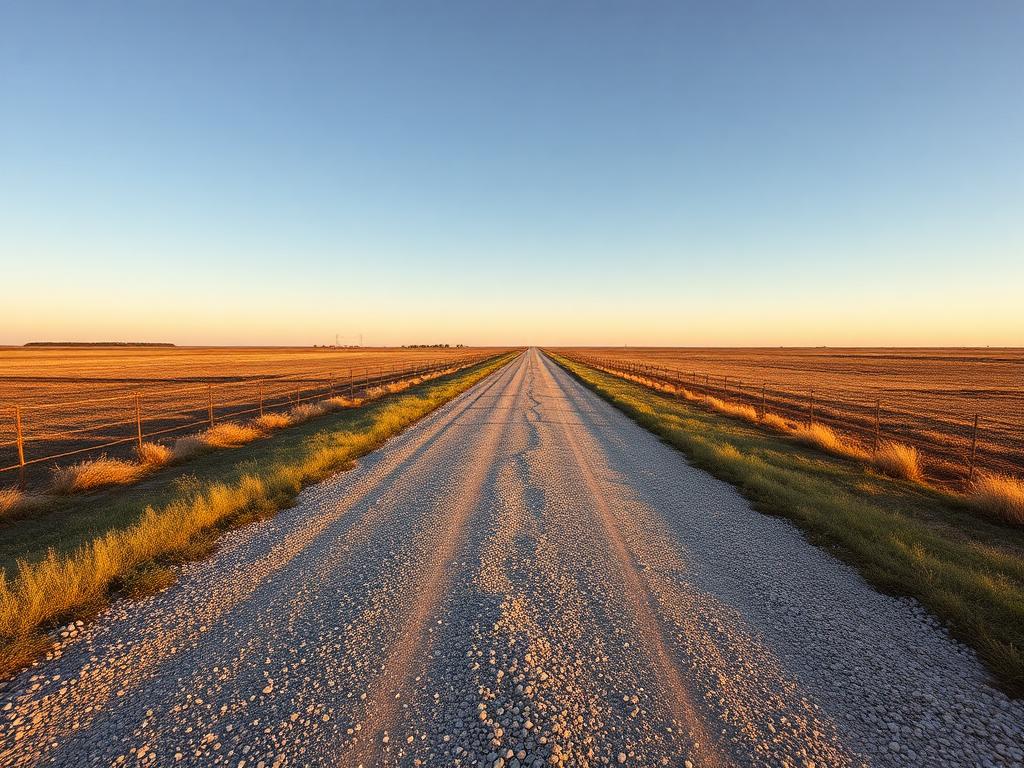
Limestone select fill is a popular choice for road base fill and other construction projects due to its excellent compaction properties and stability. Proper installation and compaction are crucial for achieving the desired load-bearing capacity and preventing future settlement. Avoiding common mistakes like skipping compaction tests or using the wrong material for your soil type will ensure a long-lasting and robust foundation.
Understanding Limestone Select Fill
Limestone select fill is a specific type of aggregate, often crushed limestone, that meets certain engineering specifications for use as a base material. Its angular shape and diverse particle sizes allow for excellent interlocking when compacted, creating a stable and strong foundation. This makes it ideal for applications requiring a durable and load-bearing surface, such as under roads, foundations, and building pads.
For a deeper dive into the properties and uses of this versatile material, check out our article on What is Limestone Select Fill? Uses, Specs, and When to Order It.
Why Choose Limestone Select Fill for Road Base?
When constructing a road, driveway, or building pad, the quality of the base material is paramount. Limestone select fill offers several advantages for road base applications in the DFW, TX area:
- Excellent Compaction: Its inherent properties allow it to achieve high levels of compaction, leading to superior load-bearing capacity and stability.
- Drainage: When properly installed, it allows for good drainage, preventing water accumulation that can compromise the structural integrity of the base.
- Cost-Effective: Compared to some other engineered fills, limestone select fill is often a more economical choice, especially for large-scale projects.
- Availability: As a readily available material, it's a practical option for construction projects across Kaufman County and the wider DFW metroplex.
The Installation Process: Achieving Optimal Road Base Fill Compaction
Proper installation of limestone select fill is a multi-step process that requires attention to detail. Skipping steps or rushing the job can lead to costly rework and structural issues down the line.
Step 1: Site Preparation
Before any material is delivered, the site must be properly prepared. This includes:
- Clearing and Grubbing: Remove all vegetation, debris, and unsuitable topsoil.
- Subgrade Preparation: The existing subgrade needs to be stable and properly graded. Any soft spots or unsuitable soils should be removed and replaced with suitable fill material, often a lean clay or sand.
- Drainage: Ensure proper drainage is established to prevent water from pooling under the new road base fill. This might involve grading the subgrade to shed water or installing geotextile fabric.
Step 2: Material Delivery and Spreading
Kaufman Sand & Gravel provides reliable bulk material delivery throughout the DFW area. Once your limestone select fill arrives, it needs to be spread evenly across the prepared subgrade.
- Even Spreading: Use equipment like a grader or dozer to spread the material in uniform lifts. The thickness of each lift is critical for effective compaction.
- Lift Thickness: For most vibratory compactors, a lift thickness of 6-8 inches (uncompacted) is ideal. Thicker lifts can make it difficult to achieve adequate compaction throughout the entire layer.
Step 3: Compaction of Road Base Fill
Compaction is the most critical step in creating a durable road base fill. This is where the material gains its strength and stability.
- Moisture Content: The material needs to be at its optimum moisture content for effective compaction. Too dry, and it won't compact well; too wet, and it will become unstable. Water trucks may be needed to add moisture if the material is too dry.
- Compaction Equipment: Vibratory rollers are typically used for compacting limestone select fill. The size and weight of the roller should be appropriate for the project size and lift thickness.
- Compaction Sequence (Lift by Lift):
- Initial Passes: Begin with static passes to key in the material and prevent shoving.
- Vibratory Passes: Engage the vibratory function and make successive passes over the entire lift. Overlap each pass by at least one foot to ensure uniform compaction.
- Edge Compaction: Pay close attention to the edges of the fill, as these areas can be prone to insufficient compaction.
- Density Testing: After compacting each lift, it is crucial to perform compaction tests (e.g., nuclear density gauge or sand cone test) to verify that the specified density has been achieved. Do not proceed to the next lift until the current one meets the compaction requirements.
- Repeat: Continue this process – spreading, moistening (if necessary), compacting, and testing – for each subsequent lift until the desired final elevation is reached.
Common Mistakes to Avoid with Limestone Road Base Fill
Even experienced contractors can make mistakes, but some are particularly detrimental when working with road base fill.
1. Skipping Compaction Tests Between Lifts
This is perhaps the most critical mistake. Without testing, you have no objective measure of whether the material has reached the required density. If a lift is under-compacted, it will become a weak point in the foundation, leading to future settlement, cracking, and structural failure.
- Consequence: Undetected weak spots, premature pavement failure, and costly repairs.
- Solution: Budget for and diligently perform compaction tests on each lift before placing the next.
2. Using the Wrong Material for the Soil Type
While limestone select fill is versatile, it's not a universal solution for every soil condition. For example, highly expansive clays might require different base materials or specific stabilization techniques.
- Consequence: Incompatible materials can lead to differential settlement, poor drainage, and overall instability.
- Solution: Conduct a thorough geotechnical investigation. Consult with a soils engineer to determine the most suitable road base fill and foundation design for your specific site's soil conditions.
3. Insufficient Moisture Content
Compaction is a combination of pressure and proper moisture. If the limestone select fill is too dry, the particles won't easily rearrange and interlock, making it impossible to achieve adequate density, no matter how much you roll it.
- Consequence: Poor compaction, leading to a weak and unstable base.
- Solution: Monitor moisture content diligently. Add water as needed during spreading and compaction to bring the material to its optimum moisture.
4. Overly Thick Lifts
Attempting to compact too much material at once (thick lifts) means the compactor's energy cannot penetrate deep enough to densify the entire layer. The bottom of the lift will remain under-compacted.
- Consequence: Under-compaction in the lower portions of the fill, leading to differential settlement and long-term structural issues.
- Solution: Adhere to recommended lift thicknesses (typically 6-8 inches uncompacted) and use appropriate compaction equipment for the job.
5. Inadequate Equipment for the Job
Trying to compact a large area with a small, lightweight compactor, or using equipment not designed for vibratory compaction, will yield unsatisfactory results.
- Consequence: Inefficient compaction, wasted time, and ultimately, a poorly constructed base.
- Solution: Rent or utilize equipment that is properly sized and specified for compacting road base fill.
Contractor vs. Owner-Builder Considerations
For Contractors
As a professional, you understand the importance of quality materials and efficient delivery. Kaufman Sand & Gravel is your trusted partner for bulk material delivery in the DFW area. We offer:
- Reliable Delivery: Flat-rate delivery up to 7 tons within 20 miles of Scurry, TX (75158), with metered rates beyond. Discounts available for multiple loads, helping you manage project costs.
- Flexible Scheduling: We run six days a week, with Sundays available by request, to accommodate your project timelines.
- Bulk Quantities: We handle loads over 28 tons with dump truck delivery – just call us for a quote to discuss your large-scale needs.
Ensure your team adheres to best practices for installation and compaction. The reputation of your business hinges on the durability of your work.
For Owner-Builders
Taking on a project like a new driveway or a building pad is a significant undertaking. While saving costs is appealing, understanding the nuances of road base fill installation is crucial.
- Educate Yourself: Learn about proper compaction techniques, moisture control, and testing.
- Consider Professional Help: For larger or critical projects, consulting with a soils engineer or hiring experienced excavation contractors can save you headaches and money in the long run.
- Material Sourcing: Order your materials from a reliable local supplier like Kaufman Sand & Gravel to ensure you get consistent, high-quality limestone select fill. Remember, we deliver! For smaller loads, our $150 flat-rate delivery is a great option. If you need other materials like gravel, sand, or topsoil, we can deliver those too!
Quantifying Your Road Base Fill Needs
To estimate how much limestone select fill you'll need, you'll calculate the volume of your area (Length x Width x Depth) and then convert that volume to tons using the material's density.
Here’s a simplified table for estimating purposes (actual values may vary slightly based on material and compaction):
| Material Type | Density (lbs/cubic yard) | Density (tons/cubic yard) | Coverage per Ton (sq ft at 6" depth) |
|---|---|---|---|
| Limestone Select Fill (Compacted) | ~2,500 - 2,800 lbs | ~1.25 - 1.4 tons | ~20 - 22 sq ft |
Example: For a 500 sq ft area, 6 inches deep: 500 sq ft / 20 sq ft/ton = 25 tons.
Always add 10-15% for waste and unexpected variations. When in doubt, it's better to slightly over-order than to run short and delay your project. Call us at (951) 239-9096 or email kaufmantrailerrentals@gmail.com for assistance with estimates or to discuss your specific delivery needs.
FAQ
Q1: How quickly can Kaufman Sand & Gravel deliver?
We run six days a week for deliveries, and Sundays are available by request. We strive to accommodate your project schedule to get your materials to you when you need them. For specific lead times, please call us directly.
Q2: Do you offer services besides material delivery?
Yes! In addition to bulk material delivery, we also offer garage clean-out and dumpster rental services. Our garage clean-out service is $350 for a 3-day trailer rental (we drop, you load, we haul) or $250 for a live load (up to 45 minutes).
Q3: What areas do you serve for bulk material delivery?
Kaufman Sand & Gravel is based in Scurry, TX (75158) in Kaufman County, and we proudly serve the entire DFW Metroplex. Our standard delivery covers up to 20 miles from Scurry, with metered rates beyond that. Check our service area page for more details.
Ensure your next construction project has the solid foundation it deserves with high-quality limestone road base fill delivered directly to your site. Kaufman Sand & Gravel is your reliable partner for all your bulk material needs across DFW.
Request a delivery quote today and get your project off to a strong start!