
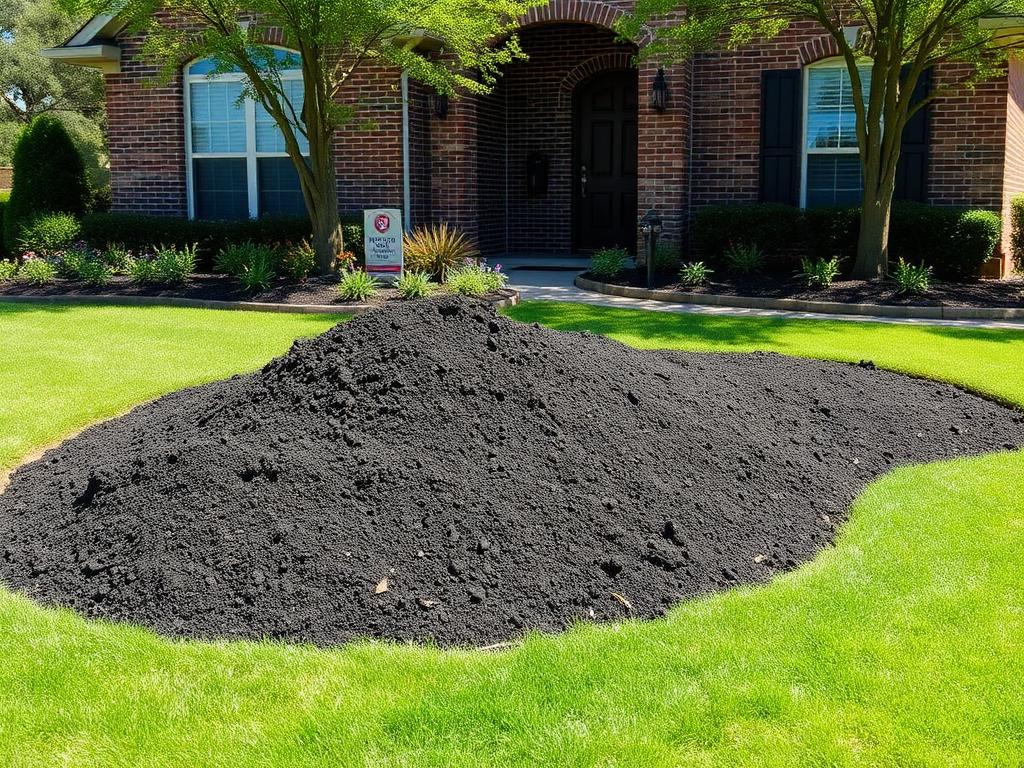
Crushed concrete, particularly in crushed concrete sizes 1 to 3 inch, offers a durable and cost-effective solution for various construction needs, including driveways, parking lots, and sub-bases. Proper installation and compaction are crucial for its longevity and performance, while avoiding common mistakes can save significant time and money on your project. This guide from Kaufman Sand & Gravel details the installation process, compaction techniques, and pitfalls to avoid when working with crushed concrete in the DFW area.
Understanding Crushed Concrete & Why It's a Top Choice
Crushed concrete, also known as Recycled Concrete Aggregate (RCA) or flex base, is a construction material made from reclaimed concrete. Old sidewalks, foundations, roads, and other concrete structures are broken down, sorted, and crushed into various sizes. For projects requiring robust support and drainage, crushed concrete sizes 1 to 3 inch are highly effective, providing excellent interlocking properties.
Benefits of Using Crushed Concrete
- Cost-Effective: Often more affordable than virgin aggregates like limestone or gravel.
- Environmentally Friendly: Reduces waste sent to landfills and minimizes the need for new quarrying. While we don't have a specific stat on tons diverted from landfills per month, using recycled materials like RCA significantly contributes to sustainable building practices by giving new life to discarded concrete.
- Excellent Compaction: The angular nature of crushed concrete allows for superior interlocking and compaction, creating a stable and durable base.
- Good Drainage: Its porous nature allows water to drain effectively, preventing standing water and erosion issues.
- Versatile: Suitable for driveways, parking lots, pathways, sub-bases for foundations, and more.
- DFW Availability: Easily sourced and delivered across the DFW metroplex by suppliers like Kaufman Sand & Gravel.
For a deeper dive into the material itself, including its specifications and common applications, visit our page on what is crushed concrete? - uses, specs, and when to order it.
Planning Your Project: Estimating & Delivery
Before you break ground, accurate planning is essential. This includes estimating the right amount of material and arranging for reliable delivery.
Estimating Material Needs
Calculating the correct tonnage prevents costly delays and over-ordering. Here's a general guide for estimating:
- Measure the Area: Determine the length and width of your project area in feet.
- Determine Depth: Decide on the desired compacted depth in inches. For driveways and parking lots, 4-6 inches (compacted) is a common minimum, but heavier traffic may require more.
- Calculate Volume (Cubic Feet): Length (ft) x Width (ft) x (Depth (in) / 12) = Cubic Feet.
- Convert to Cubic Yards: Cubic Feet / 27 = Cubic Yards.
- Convert to Tons: Multiply cubic yards by the material's density. Crushed concrete typically weighs between 1.3 to 1.5 tons per cubic yard (roughly 2700-3000 lbs per cubic yard). Use 1.4 tons/cubic yard for a conservative estimate.
Example: A 20 ft x 50 ft driveway with a 6-inch compacted depth:
- Volume: 20 ft * 50 ft * (6/12) ft = 500 cubic feet
- Cubic Yards: 500 / 27 = 18.52 cubic yards
- Tons: 18.52 * 1.4 tons/cu yd = 25.93 tons
Always add 10-15% for waste, settling, and potential depth adjustments. So, for the example above, you'd likely order around 28-30 tons.
Kaufman Sand & Gravel Delivery Services
Kaufman Sand & Gravel makes getting your materials straightforward across the DFW area.
- Standard Delivery: $150 flat per load up to 7 tons within 20 miles of Scurry, TX (75158).
- Extended Delivery: Metered per mile beyond 20 miles.
- Multiple Load Discounts: Available for larger projects – call for details.
- Large Orders: Loads over 28 tons require dump truck delivery. Please call (951) 239-9096 for a quote on these larger volumes to ensure proper logistics.
- Operating Hours: We run six days a week, Monday through Saturday. Sundays by request.
We deliver a variety of materials beyond crushed concrete, including various gravel delivery options, sand delivery, and topsoil delivery. Find out more about our broad service area.
Installation Guide: From Preparation to Final Grade
A successful crushed concrete project, particularly with crushed concrete sizes 1 to 3 inch, hinges on meticulous preparation and execution.
Step 1: Site Preparation & Excavation
- Clear the Area: Remove all vegetation, debris, and existing unstable material.
- Grade for Drainage: Ensure the subgrade is sloped away from structures (at least 2% or 1/4 inch per foot) to prevent water pooling. Proper grading is critical for long-term stability.
- Excavate: Dig down to the required depth, accounting for your desired compacted material thickness plus any sub-base material (if used).
- Compact Subgrade: The native soil or prepared subgrade beneath the crushed concrete must be firm and well-compacted. Use a plate compactor or roller.
Step 2: Laying Down Crushed Concrete
- Initial Layer: Dump the crushed concrete in manageable piles. Spread it evenly using a rake, skid steer, or grader. Avoid dumping too much in one spot, which makes spreading harder.
- Layering for Depth: For depths greater than 6 inches, spread the crushed concrete in lifts (layers) of 4-6 inches (loose). This ensures uniform compaction throughout the material.
- Moisture Content: Lightly moisten the material. Crushed concrete compacts best when it has optimum moisture content – not too dry (which prevents compaction) and not too wet (which causes rutting).
Step 3: Compaction Techniques
Compaction is the single most critical step for a durable crushed concrete surface. Crushed concrete sizes 1 to 3 inch compact exceptionally well due to their angularity.
- Equipment:
- Plate Compactor: Suitable for smaller areas, pathways, and edges.
- Vibratory Roller: Essential for driveways, parking lots, and larger areas. Different sizes are available depending on project scale.
- Trench Roller: For confined spaces or trenches.
- Compaction Process:
- Start compaction passes from the edges and work your way towards the center of the area.
- Overlap each pass by at least 6-12 inches to ensure even coverage.
- Make multiple passes (typically 3-5 passes per lift) until the material is dense and stable, with no visible movement under the compactor.
- The goal is 95% Modified Proctor density. Visually, this means the material feels solid underfoot and a probe cannot easily penetrate it.
| Compaction Equipment | Project Size | Typical Use | Notes |
|---|---|---|---|
| Hand Tamper | Very Small | Patching, tight corners | Labor-intensive, minimal compaction. |
| Plate Compactor | Small to Medium | Walkways, patios, driveways (residential) | Good for 4-6 inch lifts, requires multiple passes. |
| Vibratory Roller | Medium to Large | Driveways (commercial), parking lots, roads | Most efficient for larger areas, critical for deep bases. |
| Smooth Drum Roller | Large | Final surface, asphalt prep | Can be used to finish the top layer for a smoother look. |
Step 4: Final Grading & Finishing
- Check Grade: Use string lines, a laser level, or a transit to verify the final grade and ensure proper drainage.
- Add Top Layer (Optional): If a smoother, finer finish is desired, a layer of smaller crushed concrete (e.g., 3/4 inch minus) can be applied and compacted as a top course.
Common Mistakes to Avoid
Avoiding these pitfalls will ensure a more successful and long-lasting project:
- Insufficient Subgrade Preparation: A weak or improperly compacted subgrade will lead to settling, cracking, and failure of your crushed concrete surface, regardless of how well the top layers are installed.
- Inadequate Drainage: Failing to establish proper slopes for water runoff will result in standing water, erosion, and material degradation.
- Ordering the Wrong Size Material: Using material that's too fine for a base will lead to instability; material that's too coarse for a top layer will result in a rough surface. Using appropriate crushed concrete sizes 1 to 3 inch for a base is key.
- Poor Compaction: This is the most common mistake. Skimping on compaction time or using inadequate equipment will lead to an unstable, rutted, and short-lived surface. Ensure every layer is fully compacted.
- Ignoring Moisture Content: Too dry, and the material won't bind. Too wet, and it will become a muddy mess that won't compact correctly. Aim for a slightly damp, workable consistency.
- Overestimating / Underestimating Material: Ordering too much means wasted money; ordering too little means project delays and extra delivery fees. Use accurate calculations and factor in a buffer.
- Working on a Wet Subgrade: Compacting wet soil or crushed concrete can trap water, leading to a spongy base and future problems. Wait for the site to dry out if conditions are excessively wet.
Frequently Asked Questions
Q: What's the difference between crushed concrete and gravel?
A: Crushed concrete is made from recycled concrete, giving it angular shapes that interlock well for superior compaction and stability. Gravel is naturally occurring, usually more rounded, and while good for drainage, typically doesn't compact as tightly as RCA for base layers.
Q: How quickly can Kaufman Sand & Gravel deliver crushed concrete?
A: We run six days a week, Monday through Saturday. Sundays are by request. We strive for prompt delivery, but scheduling varies based on demand and location. It's best to call us at (951) 239-9096 or email kaufmantrailerrentals@gmail.com to discuss your specific needs and timeline.
Q: Can I use crushed concrete for purposes other than driveways?
A: Absolutely. Crushed concrete is highly versatile. Besides driveways and parking lots, it's excellent for sub-bases under concrete slabs, pathways, erosion control, backfill, and even for stabilizing muddy areas.
Beyond Materials: Garage Clean-Out & Dumpster Rental
Sometimes, before you can bring new materials in, you need to get old materials out. Kaufman Sand & Gravel also offers convenient garage clean-out and dumpster rental services for residents and businesses in the DFW area.
- Trailer Rental: $350 for a 3-day trailer rental. We drop the trailer, you load it at your convenience, and we haul it off.
- Live Load: $250 for a live load (up to 45 minutes). We bring the trailer, you load it while we wait, and we haul it away immediately.
This service is perfect for clearing out construction debris, old concrete, junk, or general clean-up projects. Learn more about our garage clean-out options.
Request Your Crushed Concrete Delivery
Ready to get started on your next project with high-quality crushed concrete? Kaufman Sand & Gravel is your trusted partner for bulk material delivery in Scurry, TX, and across the DFW metroplex. From precise estimates to prompt delivery, we're here to support your construction needs.
Request a delivery quote today! Call us at (951) 239-9096, email kaufmantrailerrentals@gmail.com, or visit our quote page to get started.